Change Language :
iglide® Chemical Resistance, Food, & Other Properties
Chemical Resistance
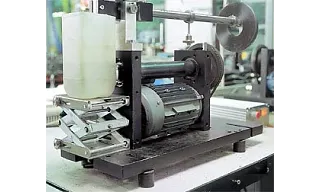
iglide® plastic bushings can come into contact with numerous chemicals during operation. This contact can lead to changes in their structural properties. The behavior of plastics toward a certain chemical is dependent on the temperature, the length of exposure, and the type and amount of mechanical loading. If iglide® plastic bushings are resistant against a chemical, they can be used in these media. Sometimes, the surrounding media can even take on the role of a lubricant.
For all iglide® plastic bushings, their resistance against traditional lubricants applies in the same way. Therefore, iglide® plastic bushings may also be used lubricated. However, in dirty environments, a traditional lubricant can decrease the wear resistance when compared to running dry.
If it is not completely clear which sort of chemicals come into play, or in which concentration, iglide® X plastic bushings should be used. They have the best resistance and are only affected by a few concentrated acids. A detailed chemical resistance list is available.
Use in Food Processing and Manufacturing
To meet special machinery and system requirements for producing food and pharmaceuticals, the iglide® product range has four specially developed bearing materials. iglide® A180, A200 and A500 bearings all comply with FDA requirements.
However, there are a number of other iglide® materials that can also be used without an issue, since their material contents are physiologically harmless. In particular, this applies to iglide® M250, iglide® H, iglide® Q, iglide® W300 and iglide® X.
For all other iglide® plastic bushings, direct contact with food should be avoided.
Legend: + resistant, 0 conditionally resistant, - non-resistant
All specifications at room temperature (68°F)
| Material | Hydro carbons | Fats, oils without additives | Diluted acids | Diluted bases |
|---|---|---|---|---|
| iglide® G (formerly G300) | + | + | 0 to - | + |
| iglide® J | + | + | 0 to - | + |
| iglide® M250 | + | + | 0 to - | + |
| iglide® W300 (formerly L280) | + | + | 0 to - | + |
| iglide® X (formerly T500) | + | + | + | + |
| iglide® A180 | + | + | 0 to - | + |
| iglide® A200 | + | + | 0 to - | + |
| iglide® A290 | + | + | 0 to - | + |
| iglide® A500 | + | + | + | + |
| iglide® F | + | + | 0 to - | + |
| iglide® H | + | + | + to 0 | + |
| iglide® H4 | + | + | + to 0 | + |
| iglide® H370 | + | + | + to 0 | + |
| iglide® L250 | + | + | 0 to - | + |
| iglide® P | - | + | 0 | - |
| iglide® Q | + | + | 0 to - | + |
| iglide® V400 | + | + | + | + |
| iglide® Z | + | + | + | + |
| iglide® B | - | - | 0 to - | - |
| iglide® C | + | + | 0 to - | + |
| iglide® D | + | + | 0 to - | + |
| iglide® GLW | + | + | 0 to - | + |
| iglide® H2 | + | + | + to 0 | + |
| iglide® J200 | + | + | 0 to - | + |
| iglide® T220 | - | + | 0 | - |
| iglide® UW500 | + | + | + | + |
Comparison of the Radiation Resistance
A comparison of the resistance of iglide® plastic bushings against radioactive rays is shown in the table below. iglide® X and iglide® Z are the most resistant plastic bushing materials.
| Material(s) | Radiation Resistance |
|---|---|
| iglide® X (formerly T500), UW500, Z | 1 x 10^5 Gy |
| iglide® A200, M250 | 1 x 10^4 Gy |
| iglide® P | 5 x 10^2 Gy |
| iglide® A180, A290, G (formerly G300), J, W300 (formerly L280), F, Q, D, J200, B, T200, UW, R | 3 x 10^2 Gy |
| iglide® H, H2, H370 | 2 x 10^2 Gy |
| iglide® A500 | 2 x 10^5 Gy |
| iglide® L250 | 3 x 10^4 Gy |
| iglide® C, V400 | 2 x 10^4 Gy |
| iglide® H4 | 2 x 10^2 Gy |
UV-Resistance
iglide® plastic bushings can be exposed to constant weathering in outdoor applications. UV-resistance shows whether a material is affected by UV radiation. Effects can range from slight color variations to the material becoming brittle. A comparison of different iglide® plastic bushing materials is given in the table below. The results show that iglide® plastic bushings are suitable for use outside. Only for a few iglide® materials show any changes expected.
Legend: + Low Resistance to +++++ Highest Resistance
| Material | UV-resistant |
|---|---|
| iglide® G (formerly G300) | +++++ |
| iglide® J | +++ |
| iglide® M250 | ++++ |
| iglide® W300 (formerly L280) | +++ |
| iglide® X (formerly T500) | +++++ |
| iglide® A180 | +++ |
| iglide® A200 | ++++ |
| iglide® A290 | ++++ |
| iglide® A500 | +++ |
| iglide® F | +++++ |
| iglide® H | ++ |
| iglide® H4 | + |
| iglide® H370 | +++++ |
| iglide® L250 | +++ |
| iglide® P | +++++ |
| iglide® Q | ++ |
| iglide® R | ++++ |
| iglide® UW | +++ |
| iglide® V400 | +++ |
| iglide® B | + |
| iglide® C | + |
| iglide® D | +++++ |
| iglide® GLW | +++++ |
| iglide® H2 | + |
| iglide® J200 | +++ |
| iglide® T220 | ++ |
| iglide® UW500 | +++++ |
Electrical Properties of Conductive iglide® Bushings
The maintenance-free, self-lubricating range of iglide® plastic bushings has both insulated and electrically conductive materials. The most important electrical properties are given in detail in each individual material description. The below table compares the most important electrical properties of iglide® plastic bushings.
The iglide® materials not mentioned here are electrically insulating. Please note that the properties of some of the materials can be changed by the material's absorption of moisture. Tests should be used to ascertain whether the required properties are stable when the conditions are changing.
| Material | UV-resistant |
|---|---|
| iglide® F | 1.5 x 10^1 |
| iglide® H | 8.8 x 10^1 |
| iglide® H370 | 2.8 x 10^3 |
| iglide® X (formerly T500) | 6.9 x 10^2 |
Additional Technical Information
Contact Us
Questions or product information? Please contact:

Customer Service
Customer Service:
Phone: Monday to Friday from 8 am - 8 pm
LiveChat: 24 hours
Book a Call
Book an Appointment with a Product Expert