Change Language :
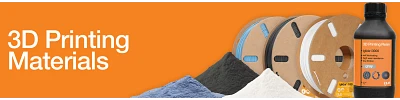
3D Printing Materials from igus® are 50x more wear-resistant vs. standard materials
SLS Powder, FDM Filament, and DLP Resin
The 3D printing materials available from igus® have been proven to last up to 50 times longer than standard plastic materials inside moving applications. We extensively test our engineered composite plastic iglide® materials inside our 41,000ft2 test laboratory in Cologne, Germany to ensure every 3D-printed component offers exceptional wear resistance comparable to our injection-molded parts. Resins, filaments, and powders are all available to meet the widest possible range of application needs and 3D printing processes. All igus 3D printing plastics are low-friction, maintenance-free, and self-lubricating. We produce custom 3D-printed components for rapid prototyping and small batches, no minimum order quantity required. Try igus plastic for 3D printing and experience lower wear, better performance, and longer service life.
Browse 3D Printing Materials


Browse the Engineer's Toolbox
FAQ: Frequently Asked Questions
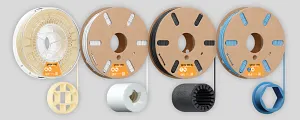
FDM: Filament is melted and laid down layer by layer on common desktop/industrial FDM printers. Our filaments run on commercial FDM machines (use proper drying and temperature settings).
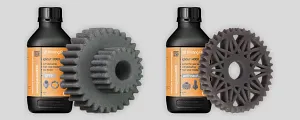
DLP: Liquid resin is photo-cured with projected light on DLP/LCD systems. Our DLP resin works on standard DLP/LCD printers with the correct wash and post-cure.
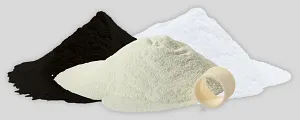
SLS: Polymer powder is laser-sintered in SLS machines. Our SLS powders require compatible laser-sintering equipment with proper powder handling and finishing.
FDM: fast functional parts on broadly available printers; wide grade range.
DLP: highest feature fidelity and smooth surfaces; ideal for micro-features and small gears.
SLS: strong, near-isotropic parts with complex internals and stable dimensions.
FDM: Filaments features an operational tolerance of ±0.2 mm.
DLP: Resin offers fine features around ~±0.1 mm
SLS: functional accuracy of ~±0.15 mm for i3 and i6 powders and ~±0.2mm for i8 and i230 powders
FDA: iglide® A350-PF, i151-PF filaments, i6-BLUE powder — all blue for visual detectability.
ESD: iglide® i230, i8-ESD, i9-ESD powders
PFAS-free: iglide® i230 powder
Every igus 3D printing material page has the material's safety, data, and processing information and more. Visit the 3D Printing section of our Engineer's Toolbox for tips, guides, whitepapers and other resources for filament drying & annealing, resin wash/post-cure, and powder handling/finishing. You can also reach out to our 3D Printing experts with any additional questions.
Three main 3D Printing materials are avaialble. SLS powders, FDM filaments, and DLP resin. All of our materials are engineered for low-friction, dry-running wear parts in motion.
They’re tuned for sliding wear and lubrication-free operation. Tests commonly show much longer life than standard printing plastics (often up to ~50× for powders/filaments and 30–60× for DLP resin). Embedded solid lubricants cut grease use, noise, and maintenance.
Temperature ranges vary by grade. The lineup includes high-temperature FDM and high-temperature SLS options; DLP supports moderate continuous temperatures. Specific info about continuous vs. peak temperature limits is available on the material's safety and data sheets.
Start with load & speed, operating temperature, chemicals or washdown, water exposure, and counterface hardness/finish. Use the igus Material Selector and service-life tools, then print a small test part to confirm performance. Contact our experts with any other questions!
Keep filaments dry (dry before printing as specified). Store powders sealed and dry; condition/sieve per guidance. Protect resins from light and follow SDS for handling and cure. Proper storage helps achieve target wear and dimensional accuracy.
Contact Us
Questions or product information? Please contact:

Customer Service
Customer Service:
Phone: Monday to Friday from 8 am - 8 pm
LiveChat: 24 hours
Book a Call
Book an Appointment with a Product Expert